
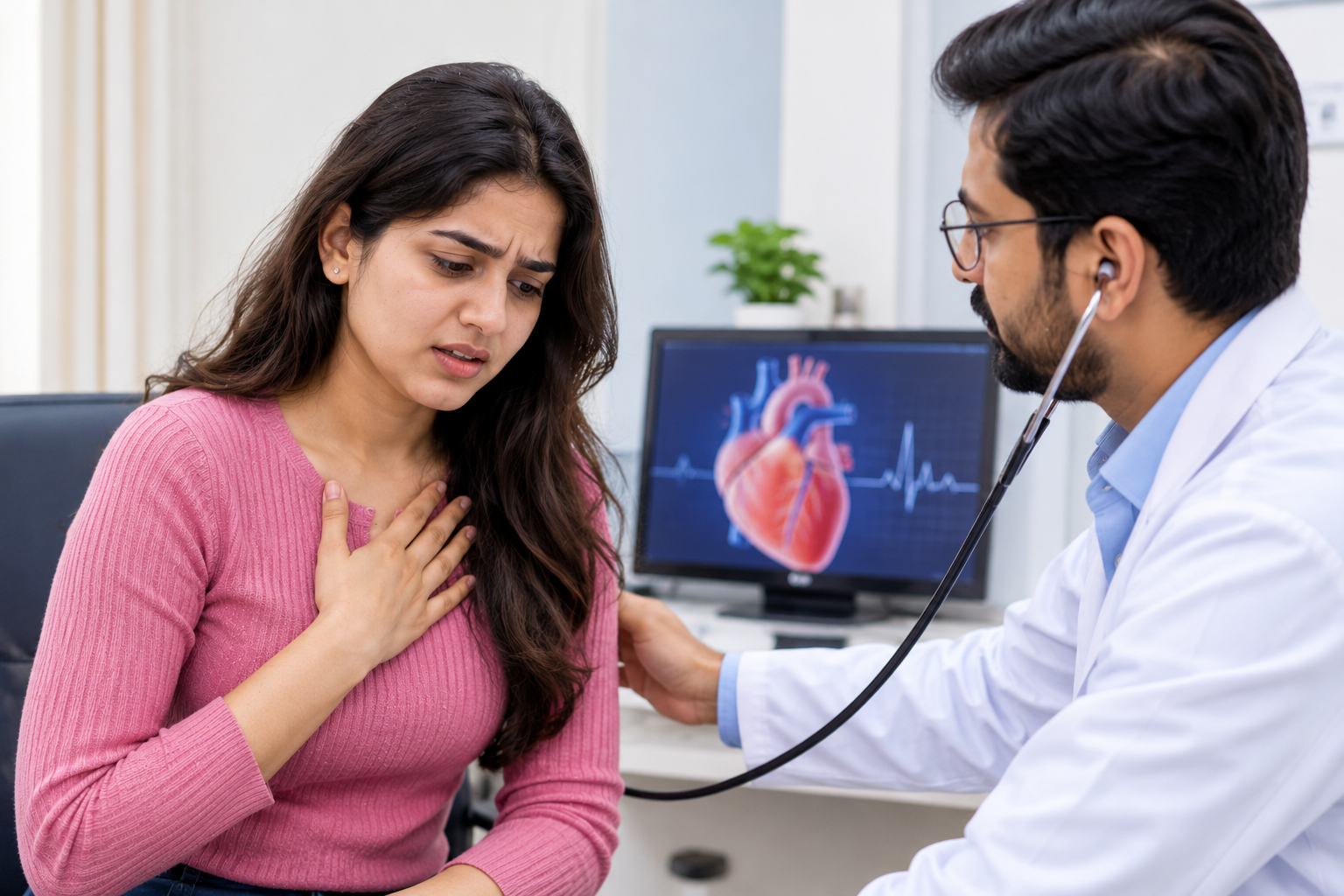
When Should You See a Cardiologist? Warning Signs & How to Choose
When Should You See a Cardiologist? Warning Signs & How to Choose
Your heart beats roughly 100,000 times a day, and most of us pay zero attention to it — until something feels off. Maybe it's a tightness in your chest after walking up a flight of stairs. Or a fluttering sensation that comes and goes without explanation. These things are easy to chalk up to stress, caffeine, or a rough week. But understanding when to see a cardiologist can be the difference between catching something early and dealing with the fallout of waiting too long.
This guide walks through the symptoms that deserve specialist attention, the tests a cardiologist will likely run, and how to find a qualified heart specialist near you without getting lost in a sea of search results.
When to See a Cardiologist
Your primary care doctor is a good first stop for a lot of things — routine bloodwork, managing a mild cholesterol issue, general check-ins. But there's a ceiling to what a GP can reasonably handle when it comes to the heart. Interpreting a stress echocardiogram, managing a complex arrhythmia, or evaluating a structural valve problem requires training that goes beyond general internal medicine.
Schedule a cardiology appointment if you're experiencing any of the following:
- Chest pain, tightness, or pressure lasting more than a few minutes
- Shortness of breath during activity that used to feel effortless — one flight of stairs, a short walk
- Heart palpitations or an irregular heartbeat, even brief ones
- A parent or sibling diagnosed with heart disease before age 60
- Blood pressure or cholesterol that hasn't responded to six months of medication or lifestyle changes
- A type 2 diabetes diagnosis — cardiovascular disease is the leading cause of death among diabetic adults
- A significant history of smoking, especially alongside other risk factors
If you're over 40 and checking two or more boxes on that list, a baseline cardiology evaluation makes sense even without obvious symptoms. Identifying subclinical atherosclerosis early, for example, keeps treatment options on the table that disappear once disease has advanced.
Warning Signs You Shouldn't Ignore
Some symptoms push this from "schedule something soon" to "get seen now."
Chest discomfort that radiates to the arm, jaw, or upper back — especially during exertion — is a serious flag; unexplained fatigue that's new and getting worse over weeks, with no clear cause like illness or sleep deprivation, can point to declining cardiac output. Lower leg or ankle swelling that builds throughout the day may reflect fluid retention associated with early heart failure. Fainting without warning, particularly during physical activity, often signals an electrical problem in the heart. A fast or irregular heartbeat that lasts more than a few minutes and doesn't settle on its own warrants evaluation.
One symptom on its own might have a benign explanation. Two or more showing up together — or the same one recurring — is a different situation altogether.
Chest Pain: Which Doctor to Consult
This is where people hesitate, and hesitation can be costly.
If chest pain comes on suddenly, feels severe, or is accompanied by sweating, breathlessness, or discomfort spreading down your left arm, call emergency services. Don't drive yourself to the hospital. Don't take a wait-and-see approach. Heart muscle can sustain irreversible damage within 90 minutes of a blockage — which is exactly why rapid response exists.
For chest pain that's milder and keeps coming back — a dull ache that appears after eating or during a stressful afternoon — start with your primary care physician. A resting EKG and basic labs can rule out the most acute concerns, and your GP can refer you to a cardiologist based on those results.
Go directly to a cardiologist if you have an existing heart diagnosis, a strong family history of cardiac events, or if discomfort appears reliably during physical exertion and clears up with rest. That last pattern is classic angina, and it needs a stress test with imaging to assess severity — not watchful waiting.
Tests a Cardiologist May Recommend
A cardiology workup isn't a single test ordered and done. It builds — starting with non-invasive options and moving toward more targeted imaging depending on what each result reveals.
- Electrocardiogram (EKG): Takes about five minutes. Captures the heart's electrical activity at rest and can flag arrhythmias, prior heart attacks, and conduction problems.
- Echocardiogram: Ultrasound of the heart's structure. Cardiologists use it to assess valve function, wall motion, and ejection fraction — the percentage of blood pumped out per beat, with normal sitting between 55–70%.
- Stress test: Monitors heart rate, rhythm, and blood pressure as you walk a treadmill at increasing intensity. Often combined with an echo or nuclear imaging for a more precise read.
- Holter monitor: A wearable recorder worn for 24–48 hours. Useful when in-office EKGs miss intermittent arrhythmias that only appear during normal daily activity.
- Cardiac CT or MRI: CT angiography can detect coronary artery narrowing without an invasive catheter. MRI provides detailed images of heart muscle and structure.
- Blood panels checking LDL, HDL, triglycerides, and high-sensitivity C-reactive protein (hs-CRP) help quantify cardiovascular risk beyond what symptoms alone show.
Which combination makes sense for you depends on your symptoms, age, and overall risk profile — your cardiologist will make that call after a thorough review.
How to Find a Heart Specialist Near Me
Searching "heart specialist near me" gets you a starting list. Working through that list effectively is a separate skill.
Your primary care physician is the best first call. A direct referral typically shortens wait times and means your cardiologist already has a channel of communication with your GP — which genuinely improves care coordination. If you don't have a PCP, your insurance provider's directory is a reliable next step. Filter by specialty, in-network status, and geography.
Hospital-affiliated physician directories are worth checking separately. Academic medical centers often publish detailed profiles that include subspecialty training — electrophysiology, heart failure management, structural heart disease — which helps you confirm whether a given physician actually covers your area of concern.
How to Choose the Best Cardiologist Near Me
Proximity matters for follow-up visits, but it shouldn't be the main filter. Here's what actually makes a difference when choosing the best cardiologist near me:
Board certification through the India Board of Internal Medicine (Cardiovascular Disease subspecialty) confirms the physician has met a defined training standard and passed a rigorous exam.
Hospital affiliation tells you what tools and procedures your cardiologist can access. A cardiologist at a Level I cardiac center can perform catheterization or ablation on-site — options that simply aren't available at a smaller community facility.
Subspecialty alignment matters more than most patients realize. Atrial fibrillation is managed most precisely by an electrophysiologist. Heart failure responds better to a cardiologist with dedicated HF clinic experience. A general cardiologist is appropriate for a first evaluation or routine risk assessment; a subspecialist becomes important once a specific diagnosis is confirmed.
How they communicate is worth assessing at your first appointment. Does the cardiologist explain your ejection fraction in terms that make sense? Do they give you room to ask follow-up questions? Physicians who can't translate clinical data into plain language tend to have patients who don't follow through on treatment plans.
Confirm insurance compatibility before booking. Out-of-network cardiology costs can be significant, and practices don't always flag this proactively.
Take the Next Step for Your Heart Health
Cardiac problems rarely show up all at once with obvious urgency. It's usually a slow accumulation — fatigue that's been building for a month, mild pressure after climbing stairs, the occasional skipped beat that you've been talking yourself out of worrying about. A cardiology consultation isn't an overreaction to manageable symptoms. It's a reasonable response when risk factors or recurring patterns cross a threshold your primary care physician can't fully evaluate.
If you're ready to find a qualified specialist, a directory like Top Doctor Near Me lets you compare cardiologists by credentials, hospital affiliation, and patient reviews — cutting down the time between "I should probably get this checked" and an appointment you feel good about.